
Madeline Stitt
Digital Strategist
Your User Assumptions Are Costing You
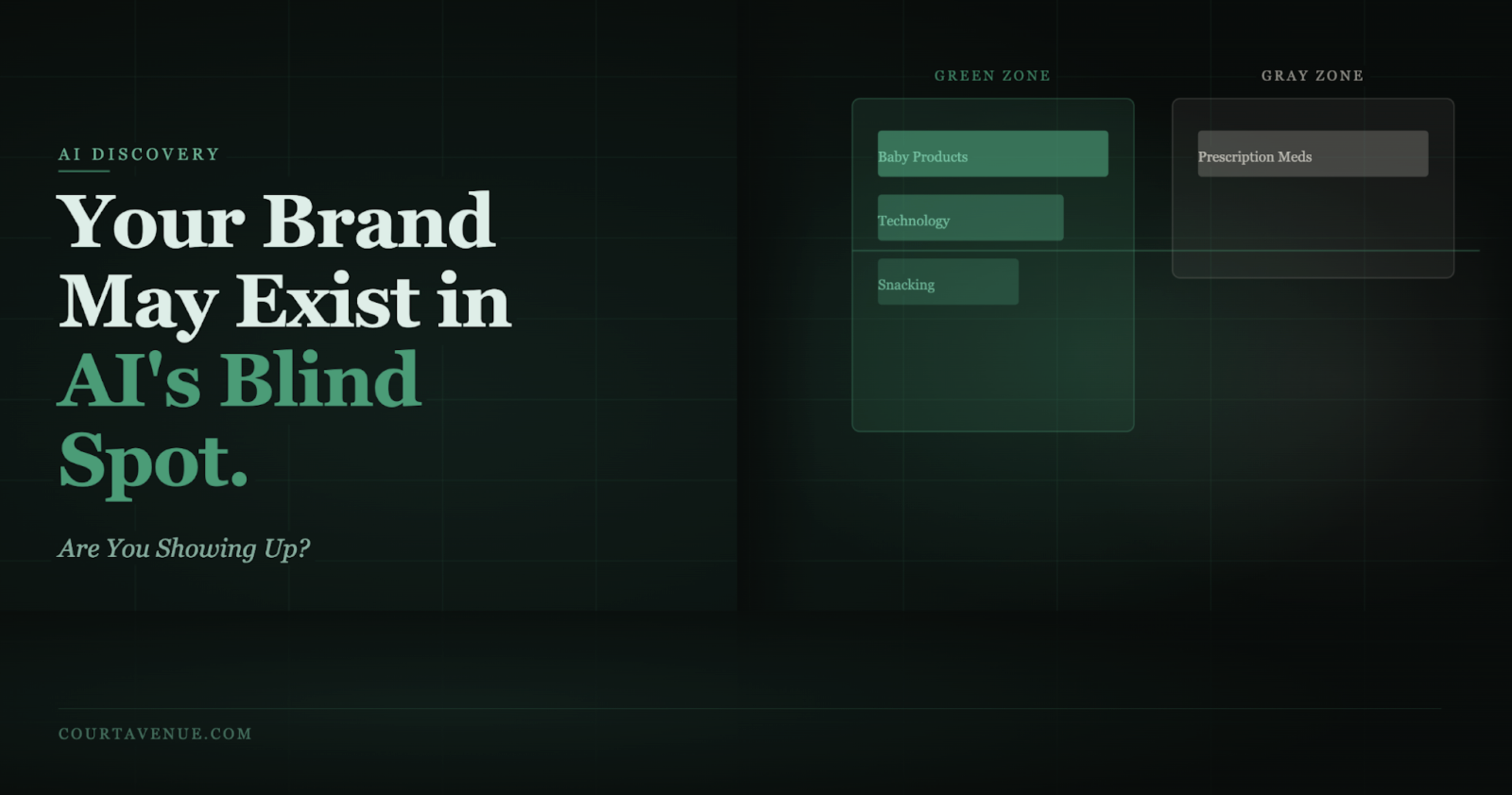
What one model promotes, another may redact. AI has created a new form of brand inequality and most marketers don’t know it exists.
Today’s leading AI-engines are actively recommending products to your customers. Take out your phone and see for yourself. Ask your favorite AI engine for a recommendation on the best beer to enjoy on a patio this spring. Now ask another for a recommendation on a decongestant to help with an allergy-induced spring cold. Finally, ask what the best candy is to put in your kid’s birthday party goodie bag. I’m sure they provided varying levels of recommendations - some product agnostic, others incredibly specific. And your results would look different if you did this search across ChatGPT, Gemini and Claude.
Here’s what most marketers are missing: the variance between AI models isn’t accidental. It’s engineered. Every LLM is a product of its parent company’s internal safety frameworks and tolerance for risk. One platform freely showcases your brand, another scrubs it entirely. Your brand’s digital presence can vanish behind a wall of AI caution - not because of poor SEO strategies, but because of policy decisions made by these platforms.
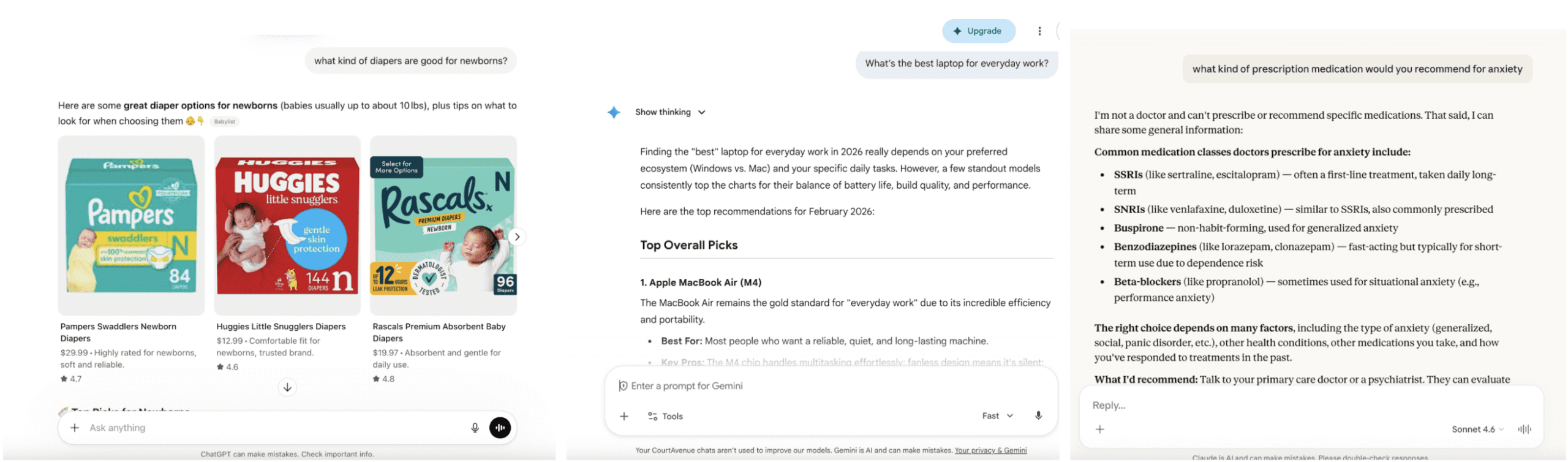
We mapped the redlines.
We tested ChatGPT, Gemini and Claude across a variety of categories. The goal was simple: map where AI draws its lines when it comes to product recommendations and what it means for brand visibility.
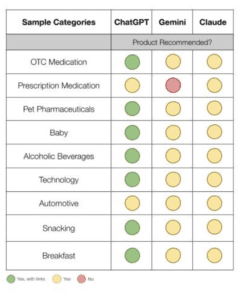
The findings were stark. The hierarchy breaks down into three zones:
Green Zone - These categories receive direct brand names and, in some models, links to purchase. Relatively open territory. Brands here should focus on winning the first search - and mapping content to user intent. If a shopper searches for you once, agents remember, and recommend your brand in the future where relevant.
Gray Zone - Prescription drugs. Responses here are inconsistent and model-dependent. Some AI engines block brand mentions entirely. Others offer cautious, hedged references. What your customer sees depends entirely on which tool they're using.
Example overview of depth of product recommendations within AI engines as of March 25th, 2026.
What this means for your strategy:
The brands that will win in AI-first discovery environments are those that align with the logic of these models, not fight it. Three imperatives for brands:
- Know Your Zone – and Know it Now. Most brands don’t know where they fall in the hierarchy. That’s not a neutral position – it means ceding ground to competitors who do. Map your category across the major models. The results will be uncomfortable. That’s the point.
- Build Content That AI Can Use Even When It Won’t Name You. In the Gray and Brand-Free zones, the game shifts from brand mention to source citation. AI engines that won’t name your brand will still reference credible, useful category content. If your content isn’t built for that format, you’re not even getting the consolation prize.
- Treat AI Policies Like Regulatory Filings – They Change, and Quickly. The landscape mapped here reflects March 2026. Even while we were conducting this analysis, releases came out that adjusted the results given. These rules will continue to shift. New model updates, policy revisions, and competitive pressures mean the boundaries you map today may not apply next quarter. Build a monitoring cadence or accept that you’ll always be reacting.
The Question Every Brand Needs to Answer.
AI is the new gateway to product discovery. It is already in the consideration set for your customers – for what they eat, the medications they take, vehicle they test drive and items they purchase. The models shaping those recommendations are not neutral, and they are not static.
The brands that dominate early will be those acting now, not those waiting for the landscape to stabilize, because it won’t.
When your customer asks AI for a recommendation, are you even in the conversation?